


- Product name
- Sprint track flooring
- Suitability
- Gyms
- Installation
- Portable
- Elasticity
- Combined elastic
- Sub-layer construction
- Continuous foam / rubber backing
- Surface finish
- EPDM rubber
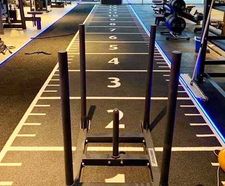
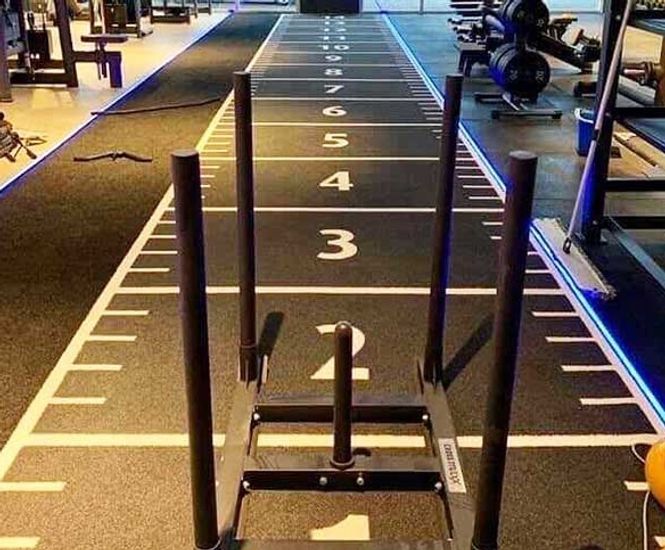
TVS Sprint Track Flooring is made from synthetic rubber bound with latex or polyurethane, designed for indoor and outdoor sprint tracks in gyms and training facilities. Typical track widths range from 1.25m to 2.5m, with lengths starting at 10m. Shock-absorbing elastic layers reduce impact on joints. Line markings, numbers, and logos can be added for customisation.
Sprint track flooring for gym and training environments
Shock-absorbing layers help reduce stress on ankles, knees, and hips
Customisable with lane markings, numbers, and logos
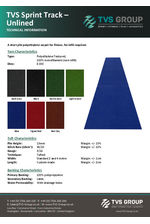
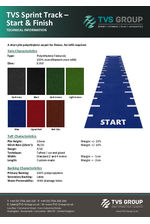
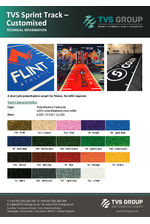
Multiple colour options including signal red, red clay, light green, dark grey, dark green, blue, and black
Suitable for sprinting, acceleration drills, lunges, and weighted leg exercises
Available in unlined, start & finish, numbered, and fully customised variations
Applications
Gyms and fitness centres
Sports training facilities
Indoor and outdoor sprint tracks
Dimensions
Width: 1.25m–2.5m
Length: minimum 10m, up to 50m or more
Materials
Synthetic rubber bound with latex or polyurethane
Colours
Signal red
Red clay
Light green
Dark grey
Dark green
Blue
Black
Options and variations
Unlined
Start & finish
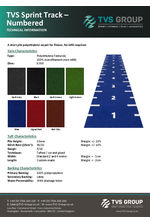
Track numbered
Customised
Performance
Shock-absorbing elastic layers
Installation
Installed in sheets indoors
Poured and sealed outdoors at 0.5in depth
What Sprint Track Flooring Is Correct?
Sprinting is widely considered to be the best exercise for building up short burst cardiovascular endurance, but it is also one of the most likely activities to cause injury. A leading cause of injuries is sprinting on surfaces that are not designed for sprinting. This is especially true when sprinting indoors.
So, what sprint track flooring is correct? The correct material is synthetic rubber bound with latex or polyurethane. These materials are installed in sheets indoors. Outdoors, they are poured and sealed at a depth of around ½”.
If your gym has space for a sprint track, this is a great way to get people to work on their cardio without jumping on a treadmill. Sprint tracks can also be used for lunges and other weighted leg work that focuses on basic strength.
Designing The Perfect Sprint Track
When designing a sprint track the most important consideration is elasticity and shock absorption. For sprint track flooring installed indoors, the subfloor will play a key role in what the sprint track will be made from and its thickness.
For example, sprint tracks installed over concrete will be thicker than sprint tracks installed over polyurethane or rubber. Sprint tracks installed over rubber may also be firmer than those installed over concrete. The ‘feel’ of the sprint track is a key consideration because we want to create the best possible sprinting experience.
Sprint track flooring can be designed to any specification. The most common requests are coloured sprint tracks and sprint tracks with markings. Gyms with lots of space may want a wider sprint track to accommodate two or more runners.
Sprint Tracks For Training And Athletes
Creating an area for sport specific training and instructor led activities is our speciality and we offer a wide range of flooring solutions to meet these requirements.
We offer sprint track rubber flooring in a variety of densities and thicknesses. We can install your sprint track over an existing floor or build it into your floor.
The comfort of our sprint track flooring is second to none because we design sprint tracks to deliver optimal comfort and performance. Your sprint track will be suitable for sprinting, jogging, drills, walking, lunges, leg workouts and much more.
Sprint tracks can be built to any size and specification, but we recommend a minimum width of 1.2m and a minimum length of 15m. Get in touch for a chat about your project.