Create values for generations with Rheinzink
True sustainability is always a long-distance run. The search for truly durable products and excellent quality has developed in recent years as a counter-trend to the throwaway society. Which material could be more in line with these basic values than zinc?
A lot will change in 50, 100 or even 200 years. Throughout the life of the building material, RHEINZINK titanium zinc remains what it is. Except that every year, the aesthetic quality improves.
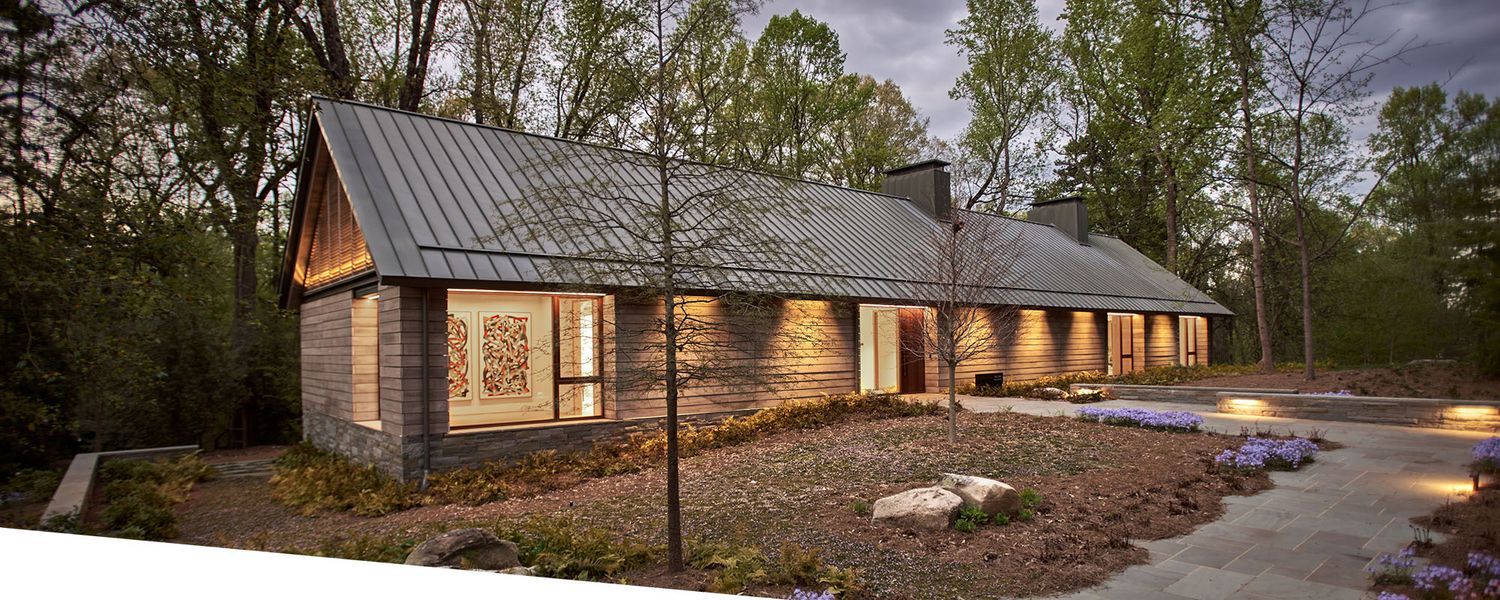
Artists retreat Loghaven
Titanium zinc interacts with the elements. With the sun, the rain, the air we breathe. In the course of time, the natural weathering process forms a matt grey protective layer, the so-called patina. Over the lifetime of the building material, it gives it its aesthetically valuable shades and colours. Above all, it provides lasting protection against weathering and corrosion.
Self-healing and practically maintenance free
The unique patina allows any scratches to disappear by themselves during the life of the building material. A bit like human skin. It naturally compensates for any scratches and thus ensures that the material is almost maintenance-free.
Virtually all of the used titanium zinc can be recycled, an infinite amount of times, with low energy consumption and without producing any polluting residue. The protective patina that develops on the surface of the zinc over time, gives zinc its incredibly long service life. Numerous historical buildings worldwide can attest to the fact that zinc roofs over 100 years are completely intact with minimal maintenance performed. Moreover, every RHEINZINK product we make today consists of 30% secondary material. Further information is available under sustainability.
Material properties
Density (spec. weight): 7.2 g/cm3
Melting point: 418°C
Recrystallization temperature: > 300°C
Expansion coefficient in rolling direction: 2.2 mm/m x 100 K
Expansion coefficient transverse to rolling direction: 1.7 mm/m x 100 K
Modulus of elasticity = 80,000 N/mm²
Non-magnetic
Non-flammable