
The century of cities
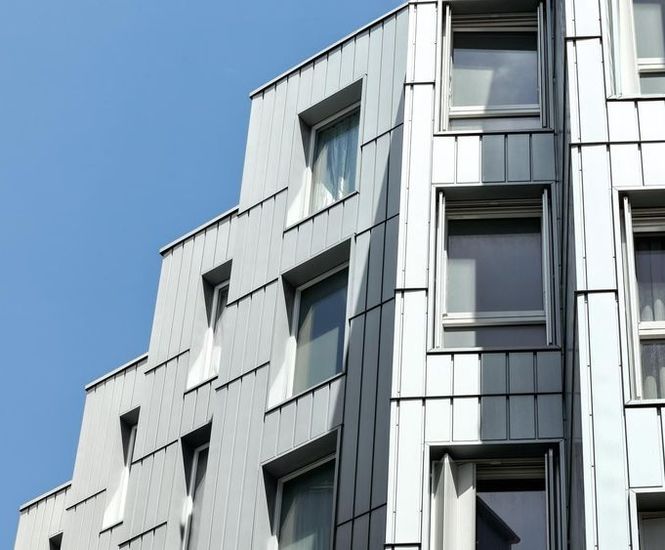
All over the world, more and more people are being drawn to cities - urbanisation is in fact one of the major megatrends of the 21st century. In the 1950s, around 70 percent of the world's population still lived in a rural environment. But this was not to stay that way; 2006 marked the first year in which there were more city dwellers than rural dwellers. And the trend is continuing: By 2050, more than two thirds of the world's population are expected to live in cities. This concentration of the population presents a variety of challenges for planners and architects alike, who are responding to them with new, creative solutions. One such example is green façades – the keyword being "More than bricks". Bringing nature and colour into the city centre is achieved, for example, with an inspiring combination of green architecture and the new RHEINZINK-PRISMO surface in natural shades. Construction in existing buildings is also a field that is becoming more and more important and complex. These are exciting topics in the field of urbanisation, which we will be looking at in more detail.
We will dedicate the first part, however, to some concepts that are not only dreams of the future in the field of urban construction, but have already been successfully implemented.
Cities are becoming multifunctional
In connection with the megatrend urbanisation, trend researchers are describing it as an era of multifunctionality, in which the boundaries between work and leisure, old and young, consumption and work are increasingly being blurred. Building structures must be able to respond more flexibly to social changes. A look into the future shows that the efficient use of urban space requires unconventional housing solutions that set new standards. Innovative concepts addressing the densification of living space are already being successfully implemented: Take micro apartments, for instance, which combine high living comfort in a small space and are therefore interesting options for different age groups.
Tiny houses
The concept of the tiny house – mini houses with a living space of around 15 m² – is an obvious choice for living in conurbations. The concept of small buildings is already commonplace in the densely populated country of Japan, but other countries are also following suit. A further development of this concept in Germany is known as the Cabin Spacey: A tiny home that makes intelligent use of all storage and nesting possibilities to accommodate everything necessary in the smallest amount of space. Boasting a mere 8.5 x 3.2 m footprint, the mobile home, which is predominantly aimed at millennials and urban nomads, can be installed on unused roof areas. The sustainable, modern and flexible material titanium zinc with the integrated solar solution RHEINZINK-PV is the perfect choice for roofing the smart minimal house. In conjunction with the photovoltaic unit on the roof of the cabin, energy is produced by the sun and fed into the city's energy supply. It is the new technologies and energy-efficient solutions that are contributing to improving the quality of city life and helping to successfully master the challenge of urbanisation.
Reaching for the sky
High-rise buildings are an intelligent and attractive solution for the city of tomorrow. They take up very little space and, thanks to modern technologies, can also meet the growing demands for sustainability and cost efficiency.