What is the right type of sliding door hardware for buildings near to coastal salt water, or for chemical plants that use salt water or corrosive chemicals in their processes?
Stainless steel 304 and 316 are the most corrosion-resistant metals, the latter being most common in coastal architecture.
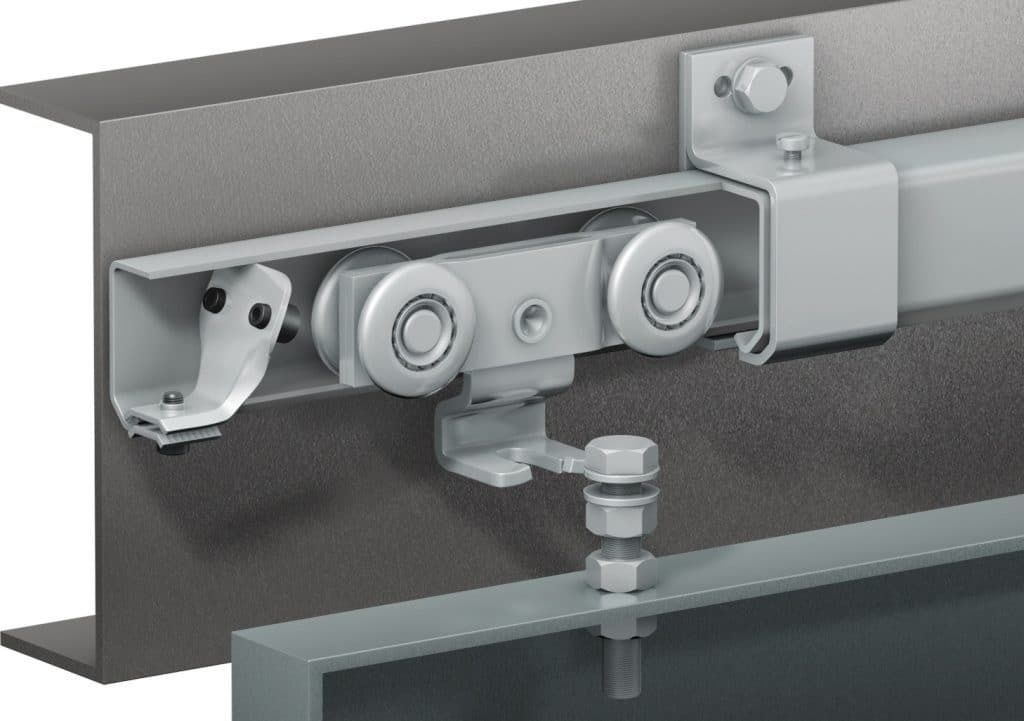
Runners high-performance stainless steel sliding door gear for wooden or metal doors is made from 316 grade stainless steel, making it a perfect choice for industries located in environments where corrosive effects are high.
The causes of metal sliding door track corrosion
Exposure to sodium chloride (aka salt) isn’t the only issue when dealing with metals in coastal areas. Saltwater or not, water alone is highly corrosive to many raw metals. The key factor is how long the metal is exposed to this moisture. For tracks that will rarely get wet, this is less of an issue. However, in coastal areas or for marine purposes for example, it is a major factor when it comes to developing alloys that can withstand being in water over an extended period of time.
Although water and salt are commonly known corrosive elements, there is another that is widespread in factories – atmospheric pollutants. Industrial environments often create these emissions, which can have a corrosive effect on metal machinery.
Small doses wouldn’t be too much of a problem however, the regular emission of pollutants seen in factories or power plants make way for a highly corrosive environment. Dust particulates are another atmospheric pollutant that comes with industrial machinery. When these particulates, such as sulphates, chlorides, or metal oxides, meet air or water, they in turn contribute to oxidation and rust.
How far-reaching are the effects of coastal weather?
Coastal and marine environments are corrosive to the metals on sliding door systems because of the quantity of sodium chloride (salt) found in the water. The salt from the sea water will travel through coastal winds, mist, fog and sea-spray miles from the actual coastline.
With varying reports, some stating 5 miles and others 10, this report indicates salt air affects metals more than 50 miles inland.
Knowing what kind of environments are more corrosive than others will help you when choosing your industrial sliding door gear from Runners Sliding Door Systems.
Problems with non stainless steel sliding door gear
Non -stainless steel metals for example carbon steel, galvanised steel, aluminium and copper all have their own qualities in their unique properties but when it comes to coastal salty environments, they will rapidly corrode.
Although having varying corrosion rates, this simply means that at the end of the day these metal composites won’t last.
Having a seemingly initial cost-wise appeal over against stainless steel, the overall end-cost of maintenance, repairs and replacements will rapidly outweigh the longevity of 316 stainless steel.