

- Project type
- Refurbishment
- Services provided
- Site survey
- Design
- Installation
- Contractor
- Abtech (UK) Ltd
- Products used
- Delta Type C cavity drain membrane system
Requirement
Delta registered installers, Abtech (UK) Ltd, provided assistance on a technically complicated project where a Type C cavity drain membrane system (not a Delta system) had failed. This was due to basement drainage having not been incorporated into the design to manage water ingress.
In principle, a Type C drainage system is a water management system. It is used to control the ingress of water once it has penetrated a structure. Moisture or running water travels behind the Type C membrane within a controlled drainage system. A Type C system isn’t classified as a barrier but provides protection by means of water management. For it to be successful, suitable drainage is needed to collect and discharge water ingress to an appropriate and safe evacuation point.
When correctly installed, groundwater drainage channels effectively relieve hydrostatic water pressure in the below-ground structure. They are installed below flooring membranes at the floor/wall junction.
Challenge
Following initial site inspections, remedial options, methodologies and cost were discussed with the main contractor. During site observations significant water was sitting on the basement slab with perimeter channel rebates filled with rubble. As with any Type C system, water ingress requires evacuation from the property, and there were no points for the evacuation of water in this structure, and no damp-proof course on the brickwork.
Solution
The project was split into 2 phases.
Phase 1
Temporary works were installed to allow Abtech to remove the blockwork in sections, along with the failed Type C system. Prior to the install of the Delta Cavity Drain System, remedial works were required.
Koster NB1 and Repair Mortar Plus were used to provide new strength to damaged concrete and offer a permanent repair that would be tough enough to stand up to most hydrostatic pressure.
Applied as a closed layer, Koster NB 1 is waterproof to pressurised water up to 13 bar. As the slurry develops, it forms a strong bond to the substrate and capillaries are plugged.
Rebates within the structural slab were levelled up and all rubble removed.
A DPC was rebuilt in the blockwork with bluebird ties, ensuring the property had an effective damp-proof course to repel water from the ground.
Phase 2
Prior to the installation of the Type C system, coved fillets were created at floor/wall junctions. Koster Polysil TG 500 was used to prevent the leaching of free lime in new concrete. Koster Polysil TG 500 if often used in combination with cavity drain membranes and drainage systems.
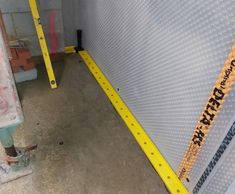
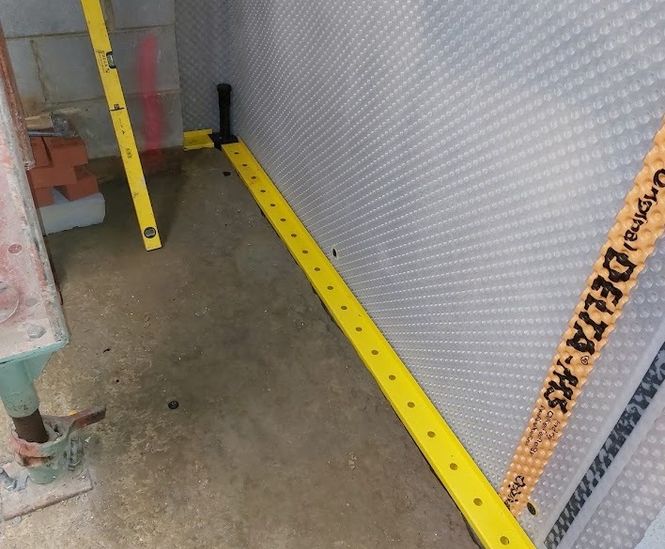
Delta MS 500 was securely fixed to the internal walls using Delta’s specialist fixing plugs, with Delta MS20 installed to floors.
Below the floor membrane perimeter drainage channels were sited within the rebates to allow for drainage of any future water ingress, with this being diverted to suitable discharge point.
Abtech added inspection ports in the perimeter channel and installed the sump pump in a location that allows easy access for periodic servicing.
After the Type C system was installed, integrity testing was undertaken to exercise the waterproofing system for worst case scenario.
Outcome
Abtech (UK) Ltd provided a fully watertight solution following the guidelines set out in BS 8102:2009 (code of practice for protection of below-ground structures against water from the ground) and Approved Documents.
The works were carried out to a high standard and delivered on time, to a tight schedule.