

- Sector
- Housing, private
- Project type
- Refurbishment
- Services provided
- Planning advice
- Project management
- Product / system manufacture
- Product / system supply
- Consultant
- Aubrey Technical Services Ltd
- Contractor
- Prism Construction
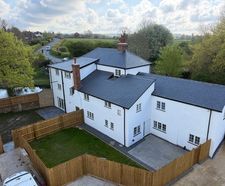
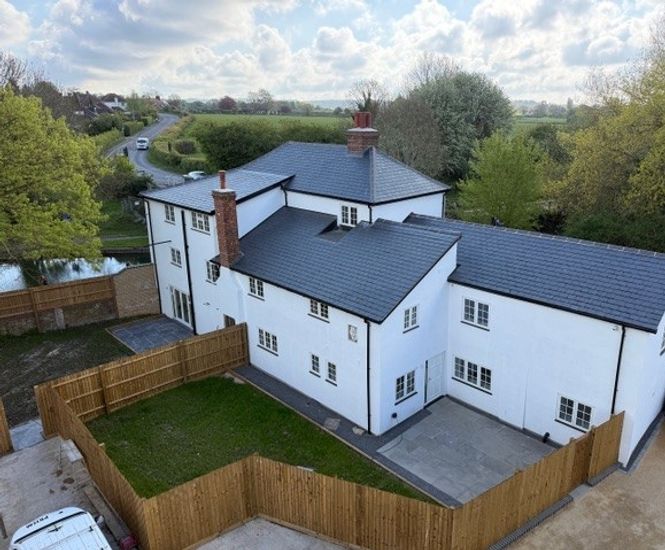
Delta Registered Installer Prism Construction successfully transformed a derelict former public house into two modern residential properties. The project presented structural challenges from the outset, with a structural engineer raising initial concerns about the potential collapse of two sections of the building.
The scope of the project encompassed converting an abandoned and damp structure into two contemporary, dry dwellings - a complete transformation to high-quality modern living spaces.
Building Characteristics & Challenges
The former public house featured original solid brick construction in excellent condition - a testament to the high-quality craftsmanship of its era. However, the building presented a complex layout with several notable challenges:
Varying ground levels along the frontage and side elevations
A requirement to raise the first floor to provide adequate headroom
Timber floors affected by wet rot, requiring full replacement
A solid concrete plank floor in Unit Two positioned slightly below ground level to the front elevation
Given the presence of subterranean elements, comprehensive waterproofing and damp proofing was identified as essential to maintaining and protecting the building's long-term structural integrity.
Waterproofing Strategy & Design Approach
Working in close collaboration with the structural engineer and the development team, Delta's Technical Team provided expert advice and guidance throughout the project, creating a bespoke waterproofing scheme.
British Standard Classification
The waterproofing specification was developed in accordance with BS 8102:2022, which categorises waterproofing performance into four grades: 1a, 1b, 2, and 3. As the lower-level spaces were intended for residential occupation, a Grade 3 performance standard - requiring a completely dry environment - was specified throughout.
BS 8102:2022 outlines three primary waterproofing methods:
Type A Barrier protection
Type B Structurally integral protection
Type C Drained cavity protection
For habitable spaces, the standard recommends combining two methods with different performance characteristics, known as combination protection. Accordingly, a combination of Type A and Type C systems was selected for this project.
Type A: Barrier Waterproofing
Delta's Technical Team recommended the application of two coats of Koster NB1 to the front face of the brickwork and LGF slab, prior to installation of the Type C cavity drained protection system. This provided an additional line of defence, designed to reduce risk through redundancy.
Thorough substrate preparation was carried out before application. Internal 90-degree angles were filleted using Koster Repair Mortar Plus, voids were filled, and any loose masonry was adequately pointed. All new concrete was treated with Koster Polysil TG 500, spray-applied to prevent free lime build-up.
This treatment was critical: free lime and mineral salts leaching from concrete can cause Type C drained protection systems to fail. As outlined in BS 8102:2022 Section 10.2.1.2, these substances can deposit within cavity drainage systems, perimeter channels, and sump chambers, leading to blockages and potential system failure.
Type C: Cavity Drained Protection System
Delta's Type C Cavity Drained Membrane (CDM) system was selected, ensuring the required Grade 3 habitable environment was achieved. The system supports slight movement and vibration without affecting structural dynamics, and permits moisture or water to travel behind the membrane in a controlled drainage configuration, requiring minimal substrate preparation.
Wall Treatment
Walls above external ground level are susceptible to rising dampness; therefore, all walls were lined with the Type C system. Combination waterproofing was applied specifically to retaining walls. Delta MS 500 was installed on all wall surfaces.
Floor Treatment
Delta MS20 was laid on the floor and joined to the MS 500 wall membrane to form a continuous waterproof envelope. Delta FM was deployed to the concrete plank at first floor level to protect against lateral capillary-held moisture. Delta's Technical Team also specified Delta High Performance DPC to isolate the new timber floors.
Drainage
Delta drainage channel was installed adjacent to all retaining walls and directed to non-return valves, allowing water to evacuate via gravity, exploiting the natural topography of the site. A vapour control layer was also recommended on the warm side of any insulation provided.
Products Used
Delta MS 500 - cavity drain wall membrane
Delta MS 20 - cavity drain floor membrane
Delta Cornerstrip
Delta Tape
Delta Qwikseal Plugs
Delta FM - first floor lateral moisture protection
Delta Drainage Channels
Koster Repair Mortar Plus - substrate preparation
Koster NB1 - Type A barrier tanking
Koster Polysil TG500 - free lime treatment
Outcome
The client, Prism Construction, expressed high satisfaction with Delta's technical approach. Structural waterproofing requires a technical and design-driven strategy —- one that Delta effectively delivered.
The successful delivery of this project was the result of close collaboration between Delta's Technical Team, Nick at Prism Construction, and Aubrey Technical Services Ltd, whose combined expertise ensured excellent results across a particularly challenging conversion.